Quick answer: A heating oil tank typically needs replacing when it shows visible rust or corrosion, weeping or leaking around seams and fittings, significant dents or bulging, or when it reaches the end of its expected service life. Indoor steel tanks commonly last 15–30 years; outdoor and underground tanks often less, since they face weather and soil exposure.
Key Takeaways
Rust, weeping seams, dents, or bulging are the main replacement signals
Indoor tanks generally outlast outdoor and underground tanks
A tank failure can become an environmental cleanup issue, which is far costlier than replacement
Annual visual inspection catches most problems early
Why Tank Condition Matters More Than Most Homeowners Realize
An oil tank failure isn’t just an inconvenience – a leak can become a soil contamination issue requiring professional remediation, which typically costs far more than a planned tank replacement would have. This is the main reason tank inspection is worth taking seriously rather than deferring.
What to Look For
Rust and corrosion, especially on the underside and around the legs or base
Weeping or staining around seams, welds, and fittings – often visible as darkened patches Dents or bulging, which can indicate internal pressure or structural weakness
Unstable legs or settling, particularly on outdoor tanks
Age, if the tank predates your ownership and has never been assessed
Underground tanks deserve particular attention, since you can’t inspect them visually — condition has to be assessed professionally.
Indoor, Outdoor, or Underground?
Each has tradeoffs. Indoor tanks are protected from weather and typically last longest. Outdoor above-ground tanks are easier to inspect and replace but face temperature swings and moisture. Underground tanks are invisible in the yard but carry the highest contamination risk if they fail, and many homeowners choose to replace them with above-ground alternatives when the time comes.
What Replacement Involves
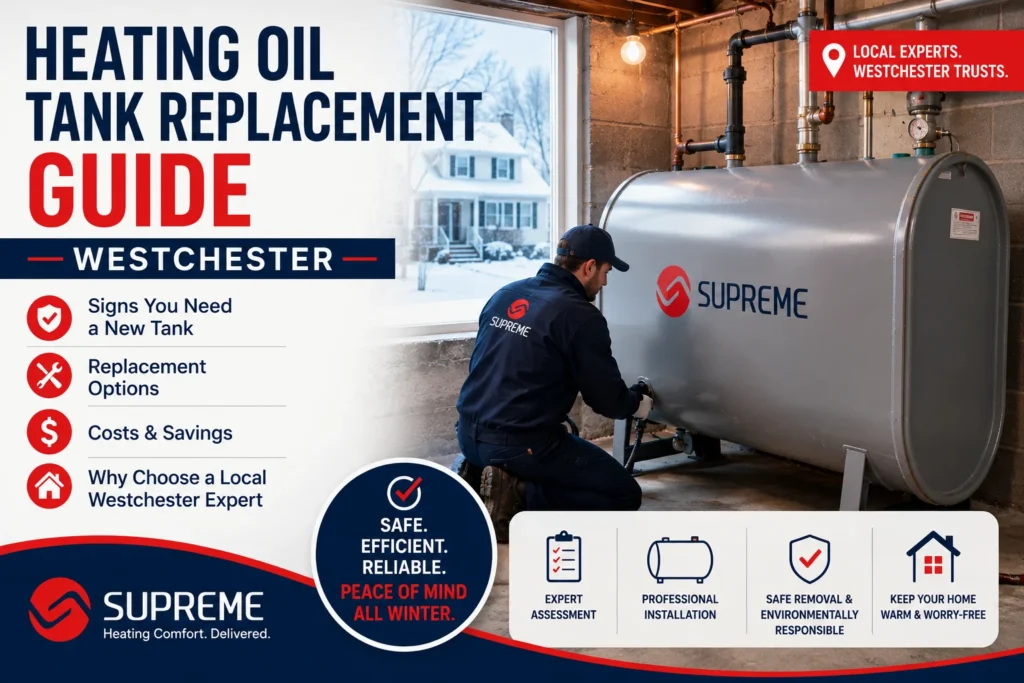
A typical replacement includes assessing the existing tank, safely removing remaining fuel, decommissioning and removing the old tank, installing and connecting the new one, and confirming the system runs correctly afterward. Timelines and permit requirements vary by municipality across Westchester County.
Supreme Oil handles tank assessment and can advise on whether replacement is warranted for your specific situation.
Oil Tank FAQs
How long does a heating oil tank last?
Indoor steel tanks commonly last 15–30 years. Outdoor and underground tanks often have shorter service lives due to weather and soil exposure.
How do I know if my underground tank is leaking?
You can’t confirm it visually. Signs can include unexplained fuel loss, oil odors, or vegetation dying near the tank area – but professional testing is the only reliable assessment.
Do I need a permit to replace an oil tank in Westchester?
Requirements vary by municipality. Supreme Oil can advise on what your specific town requires.
Is a bigger tank better?
Not necessarily. A larger tank means fewer deliveries but higher upfront cost and more space required. Very small tanks (under 200 gallons) can face higher per-gallon rates and more frequent fills.