Quick answer: Before the first cold week in Westchester, homeowners should check their heating oil level, inspect their heating system and oil tank, test the thermostat, clear heating vents, and arrange heating oil delivery or maintenance if needed.
Key Takeaways
- Check your heating oil level before temperatures drop.
- Schedule heating-system maintenance if required.
- Inspect your heating oil tank for visible problems.
- Test your thermostat and heating equipment.
- Keep radiators and vents unobstructed.
- Plan heating oil delivery before your tank becomes critically low.
- Address small heating problems before winter demand increases.
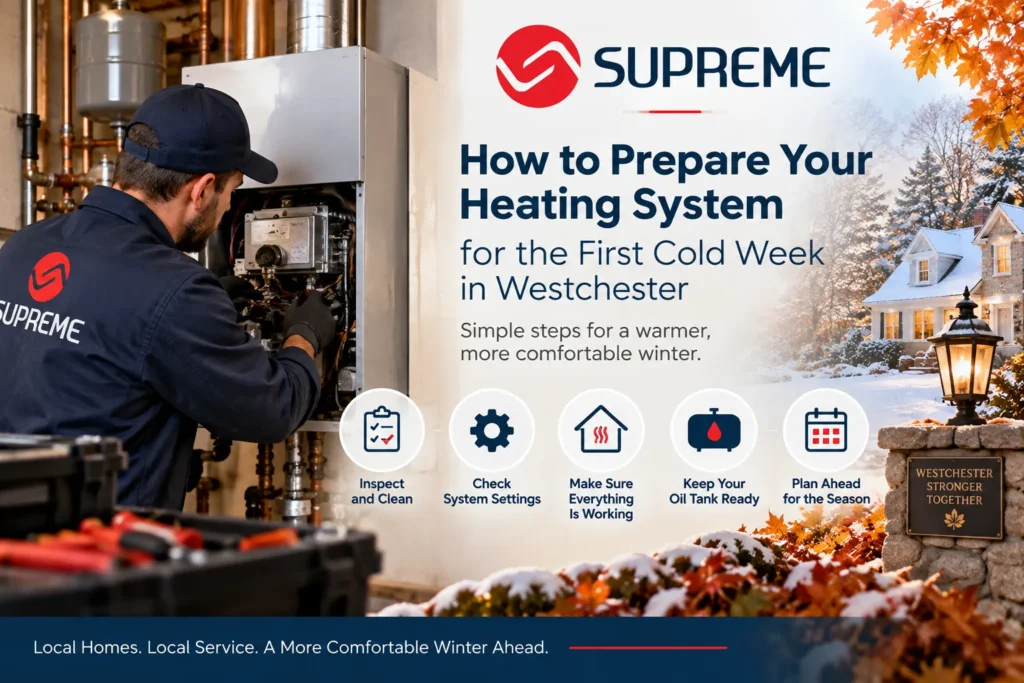
How to Prepare Your Heating System for the First Cold Week in Westchester
The first cold week of fall can arrive quickly in Westchester County. After months of warmer weather, your heating system may suddenly be working for several hours a day. If your home relies on heating oil, early fall is a good time to make sure your fuel supply, heating equipment, and thermostat are ready.
Waiting until the first freezing night to discover a low oil tank, heating-system problem, or boiler issue can turn a simple maintenance task into an urgent service call.
Before colder weather arrives, use this checklist to prepare your home.
1. Check Your Heating Oil Level
During the summer, your heating system may have used little or no fuel. However, once temperatures fall, heating demand can increase quickly.
If your tank is already low, consider arranging a delivery before you need the heat regularly.
Keeping an adequate supply of heating oil can help you avoid running out during the first cold stretch of the season.
For homeowners using automatic delivery, make sure your account information and delivery details are current.
2. Schedule a Boiler or Heating System Check
Your heating system may have been inactive for much of the summer.
Before relying on it every day, consider having your boiler or heating equipment inspected and serviced by a qualified professional.
A professional service visit can help identify issues that may otherwise become noticeable only when the system is under heavy demand.
Depending on your equipment, a heating-system check may include examining components, checking operation, inspecting connections, and making sure the system is operating properly.
Regular maintenance can also help identify small problems before they become larger heating emergencies.
3. Inspect Your Heating Oil Tank
Your heating oil tank should also be part of your fall preparation.
Look for visible signs of:
- Rust or corrosion
- Staining or wet areas
- Leaking around fittings or seams
- Dents or bulging
- Damaged legs or supports
- Unusual odors around the tank
Indoor steel tanks commonly have a longer service life than tanks exposed to outdoor weather or underground conditions. Tank condition, installation, age, and environment all affect how long a tank remains serviceable.
If you notice something unusual, have the tank evaluated rather than waiting for a leak or failure.
For more information, see our guide:
4. Test Your Thermostat
Turn your thermostat to a heating setting and make sure your system responds normally.
If the thermostat is programmable, review the schedule before the colder months begin.
You may also want to replace the batteries if your thermostat uses them.
A thermostat problem can sometimes appear to be a heating-system problem, so checking the thermostat is a simple step that can save time when you first turn the heat on.
5. Check Your Radiators, Vents, and Registers
Make sure furniture, rugs, curtains, storage boxes, and other household items are not blocking radiators or heating registers.
Blocked airflow can affect how effectively heat moves through your home.
For forced-air systems, check that supply and return vents are open and unobstructed.
For homes using radiators or baseboard heating, make sure the areas around them are clear.
If you notice unusual noises, uneven heating, or other changes when the system runs, consider having the system inspected.
6. Check Your Heating System for Unusual Sounds or Odors
When you first turn your heating system on, pay attention to how it operates.
Unusual sounds, repeated cycling, unusual odors, or inconsistent heating may indicate that the system needs attention.
Do not ignore a problem simply because the system continues to produce heat.
A small issue discovered in September or October can be easier to address than the same problem during a cold-weather emergency.
If you smell fuel, see evidence of a leak, or suspect an unsafe condition, move away from the area and contact the appropriate qualified professional or emergency service.
7. Don't Wait Until the Tank Is Empty to Order Heating Oil
One of the most important parts of fall preparation is planning your heating oil delivery.
Heating-oil demand increases as temperatures fall. Planning ahead gives homeowners more time to arrange delivery and address any questions about their account or fuel plan.
Supreme Oil offers different heating-oil delivery and pricing options, including Automatic Delivery and price-protection plans.
The right option depends on your household’s fuel usage, budgeting preferences, and delivery needs.
Homeowners who want predictable pricing can review available price-protection options, while customers who prefer market-based pricing can consider automatic delivery.
8. Review Your Heating Oil Delivery Plan
If you already have a heating-oil provider, review your current delivery arrangement before winter.
Check:
- Your account information
- Delivery address
- Tank size
- Current oil level
- Delivery instructions
- Preferred payment method
- Contract or pricing-plan terms
- Service contact information
If you are considering changing providers, compare more than just the advertised price.
Consider delivery policies, contract terms, service availability, fees, minimum orders, and the company’s ability to provide heating-system service if needed.
9. Think About Your Heating Oil Usage
There is no single amount of heating oil that every Westchester home will use during winter.
Fuel consumption can vary depending on:
- Home size
- Insulation
- Outdoor temperatures
- Thermostat settings
- Heating-system efficiency
- Number of occupants
- How frequently the system operates
A homeowner in a well-insulated home may use considerably less fuel than someone heating a larger or less-efficient property.
Keeping track of your usage from one season to the next can help you better understand your household’s heating needs.
10. Don't Ignore Small Heating Problems
If your heating system showed problems at the end of last winter, fall is the time to address them.
Examples include:
- Uneven heating
- Frequent cycling
- Unusual noises
- Difficulty maintaining the thermostat setting
- Repeated service calls
- Unusual fuel consumption
- Visible tank corrosion
Problems that were manageable during mild weather can become more disruptive when the system is operating continuously.
Addressing known issues before the first major cold spell gives you more time to arrange service.
Why Fall Preparation Matters in Westchester
Westchester homeowners can experience significant changes in heating demand as temperatures move from mild fall weather into colder conditions.
Your heating system may sit mostly unused during the warmer months and then become one of the most important systems in your home.
Preparing early gives you an opportunity to:
- Check your fuel supply.
- Inspect your heating equipment.
- Address maintenance issues.
- Review your delivery plan.
- Identify potential problems before cold weather arrives.
The goal is not to predict exactly when the first cold day will occur. The goal is to make sure your home is ready when it does.
Heating Oil Delivery in Westchester
Supreme Oil & Service Corp provides heating oil delivery and heating services for homeowners throughout Westchester County.
Customers can choose from available delivery and pricing options based on their needs, including Automatic Delivery and price-protection plans.
If you are preparing your home for the upcoming heating season, checking your oil supply early and arranging delivery before you need fuel can make winter preparation easier.
Final Fall Heating Checklist
Before the first cold week arrives, make sure you have:
- ☐ Checked your heating oil level
- ☐ Scheduled heating-system maintenance if needed
- ☐ Inspected your oil tank for visible problems
- ☐ Tested your thermostat
- ☐ Cleared radiators and heating vents
- ☐ Checked for unusual noises or odors
- ☐ Reviewed your heating-oil delivery plan
- ☐ Confirmed your account and delivery information
- ☐ Addressed known heating-system problems
- ☐ Saved your heating service provider’s contact information
A few simple checks in early fall can help you start the heating season prepared instead of waiting until the first cold night to discover a problem.
Frequently Asked Questions
When should I prepare my heating system for winter?
Early fall is a good time to prepare your heating system, before temperatures consistently require daily heating. This gives you time to arrange maintenance, check your oil supply, and address problems before colder weather arrives.
How often should I check my heating oil level?
Check your oil level regularly during the heating season. Your rate of fuel consumption will depend on your home, heating system, thermostat settings, weather, and other factors.
Should I have my boiler serviced before winter?
If your boiler requires routine maintenance or has experienced problems, having it inspected before the heating season can help identify potential issues before the system is under heavy winter demand.
What should I look for on my heating oil tank?
Look for visible rust, corrosion, staining, wet areas, damaged fittings, dents, bulging, or unstable supports. If you see signs of a possible leak, have the tank evaluated by a qualified professional.
How can I avoid running out of heating oil?
Monitor your tank level and arrange delivery before the tank becomes critically low. Customers using automatic delivery can also review their delivery arrangements before the heating season begins.
Does Supreme Oil provide heating oil delivery in Westchester?
Yes. Supreme Oil & Service Corp provides heating oil delivery and heating-related services to customers throughout Westchester County.