Quick answer: Before the heating season starts, Westchester homeowners should have their boiler/furnace professionally tuned up, check their oil tank for signs of wear or leaks, confirm their delivery plan is enrolled, and test their thermostat and any zone controls. Doing this in August or early September avoids the rush – and the risk -of discovering a problem on the first cold night.
Every fall, heating companies across Westchester see the same pattern: a spike in emergency service calls in the first cold snap, many of which trace back to a maintenance issue that could have been caught weeks earlier.
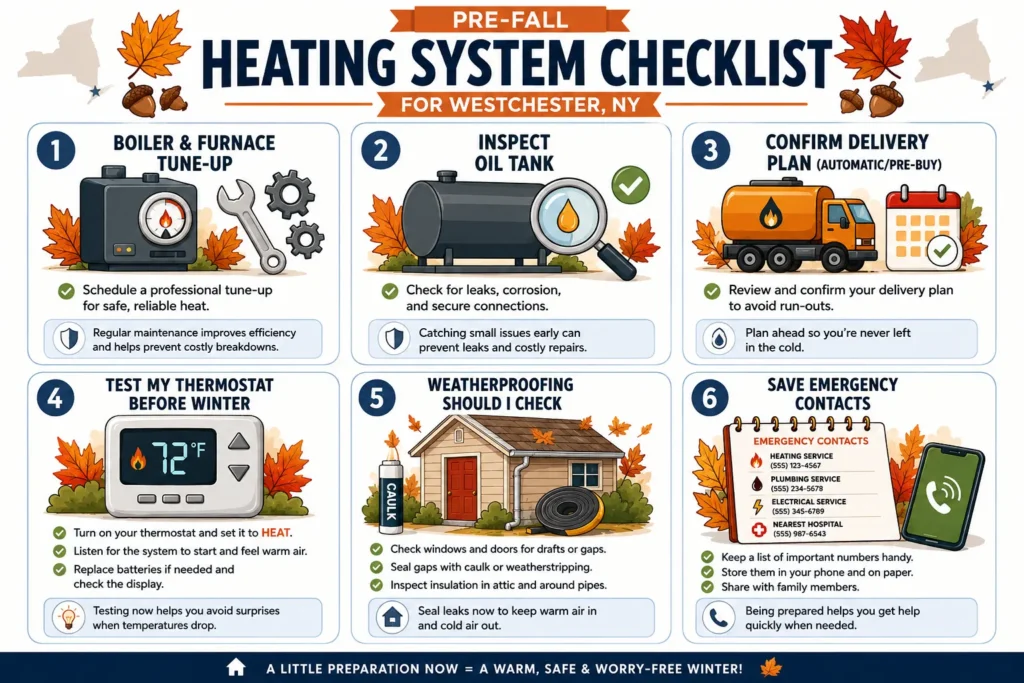
Do these six things in August, before the first cold night makes them urgent.
1. Should I Schedule a Boiler or Furnace Tune-Up Before Fall?
Yes -an annual service visit is the single most effective thing you can do before the season starts. A technician will clean and inspect your system, check for efficiency issues, and catch small problems -a worn part, a minor leak, a dirty nozzle – before they become a mid-winter breakdown. A well-maintained system also uses less fuel for the same output, which directly affects your seasonal usage and cost.
Why August/September specifically: service scheduling gets significantly busier as temperatures drop and other homeowners start calling with the same idea (or worse, with an actual emergency). Booking in late summer means you get a convenient appointment time, not a rushed one.
2. How Do I Inspect My Own Oil Tank?
If you have an above-ground tank, do a visual check for rust, dents, or any signs of leaking around fittings and the base. If your tank is older or you’ve never had it inspected, it’s worth having a technician assess its condition — tank failures are rare, but they’re also entirely preventable with routine inspection.
3. When Should I Confirm My Delivery Plan for the Season?
Now. If you haven’t already, this is the moment to decide between Pre-Buy, Fixed, and Automatic Delivery for the coming season (see our full comparison) and get enrolled. Doing this in August means your account and delivery schedule are confirmed well ahead of the first cold night -not something you’re setting up reactively during an emergency.
4. Do I Need to Test My Thermostat Before Winter?
Yes, especially if you have a programmable or smart thermostat — confirm it’s working correctly and consider setting a fall/winter schedule now, before you need it. If you have zoned heating, verify each zone is responding correctly — a stuck zone valve is a common, fixable issue that’s much easier to diagnose in a low-stakes August test than during a January emergency.
5. What Weatherproofing Should I Check?
Not directly part of your heating system, but directly related to how much you’ll spend running it: check for drafts around windows and doors, and confirm attic and basement insulation is in reasonable shape. Small sealing fixes now can measurably reduce how hard your system has to work this winter.
6. Do I Know Who to Call in an Emergency?
Before the season starts, make sure you know your provider’s emergency contact information and have a general sense of their service hours and response expectations. Confirming this in a calm moment, rather than looking it up during a no-heat emergency, is a small step that saves real stress later.
The Full Checklist at a Glance
- Schedule a boiler/furnace tune-up
- Inspect your oil tank for rust, dents, or leaks
- Confirm your seasonal delivery plan (Pre-Buy, Fixed, or Automatic)
- Test your thermostat and zone controls
- Check weatherproofing around windows, doors, and insulation
- Save your provider’s emergency contact information
None of this is complicated, but all of it is easy to put off — until the first genuinely cold night makes it urgent. Taking an hour in August to work through this checklist is the difference between a smooth start to the heating season and a stressful, more expensive one.
Frequently Asked Questions
Most heating professionals recommend an annual tune-up, ideally before the start of each heating season.
How do I know if my oil tank needs to be replaced?
Signs include visible rust or corrosion, dents, leaks around fittings, or the tank simply being old – a professional inspection is the most reliable way to assess actual condition.
What's the difference between a tune-up and a repair?
A tune-up is preventive maintenance performed on a working system to keep it efficient and catch small issues early; a repair addresses an existing problem, often found during a tune-up or an emergency call.
Is it too late to schedule service if I wait until October?
No, but appointment availability typically gets tighter as demand increases through fall — scheduling in August or early September generally means more flexible timing.